You Keep Landing With a Stiff Neck
If you’ve ever stepped off a 14-hour flight feeling like you’ve been in a car accident, you’re not alone. Neck pain after long-haul travel is one of the most complained-about parts of flying — and yet most people keep buying the same type of pillow and getting the same result.
Here’s what’s actually going on.
The Real Reason Your Neck Hurts After Flying
It’s not the seat. It’s not the altitude. It’s not even how long the flight is.
It’s what happens to your head when you fall asleep.
When you drift off in an economy seat, your neck muscles relax completely. Without something holding your head in position, it drops forward or sideways — sometimes repeatedly throughout the flight. Each time that happens, the muscles and ligaments in your neck are being stretched under the weight of your head (roughly 5–6 kilograms) for hours at a time.
That’s why you land stiff. It’s a slow, sustained strain — not a single injury.
Why Most Travel Pillows Don’t Help
The traditional U-shaped travel pillow has one fundamental problem: it supports the front and sides of your neck, but it stays in place by tension alone. The moment you fully relax — which is exactly when you fall asleep — the pillow shifts, slides, or falls off entirely.
You end up either:
- Waking yourself up repeatedly to readjust it
- Sleeping without it because it kept falling off
- Holding your neck stiff trying to keep it in place, which causes its own kind of pain
The Ostrichpillow Go addresses this with a wrap design that overlaps at the front and secures with velcro — and that’s closer to the right idea. The key insight is that a pillow needs to be secured to your neck, not just resting against it.
What Actually Works: The Wrap-Lock Mechanism
The design that solves this problem is one that wraps completely around the neck and locks in a closed position. Instead of relying on tension or your own muscle engagement to stay put, it physically cannot move once secured.
This means:
- Your neck is supported from behind — where it needs it most during sleep
- The pillow stays in position even when you’re completely relaxed
- You can shift, turn, or slouch in your seat without it falling off
It sounds obvious. The surprising thing is how few travel pillows actually do this.
What to Look For
If you’re in the market for a travel pillow that will genuinely make a difference on a long flight, here’s what to check:
1. Does it wrap all the way around? A horseshoe shape that just rests on your shoulders won’t stay put. Look for a design that completes the loop around your neck.
2. Is there a locking or fastening mechanism? Velcro, a clasp, or a snap closure at the front means the pillow stays secured regardless of how you move.
3. Is the foam dense enough? Thin or low-density foam compresses under the weight of your head and stops supporting you within an hour. High-density memory foam holds its shape throughout the flight.
4. Does it pack down small? You’ll actually use a pillow that fits in your carry-on. One that clips to the outside of your bag or rolls into a small pouch removes the excuse not to bring it.
The Difference It Makes
The difference between a pillow that stays on and one that doesn’t isn’t just comfort — it’s the entire quality of your sleep on the flight, which directly affects how you feel when you land.
Arriving fresh after a 14-hour flight isn’t about luck or having a good seat. It’s about having your neck supported in the right position for the duration of the flight so your muscles aren’t working overtime while you sleep.
For Australians flying Sydney to London, Melbourne to Dubai, or Brisbane to Tokyo — flights that regularly exceed 10–14 hours — this matters more than almost any other piece of travel gear you pack.
About NECKLOCK
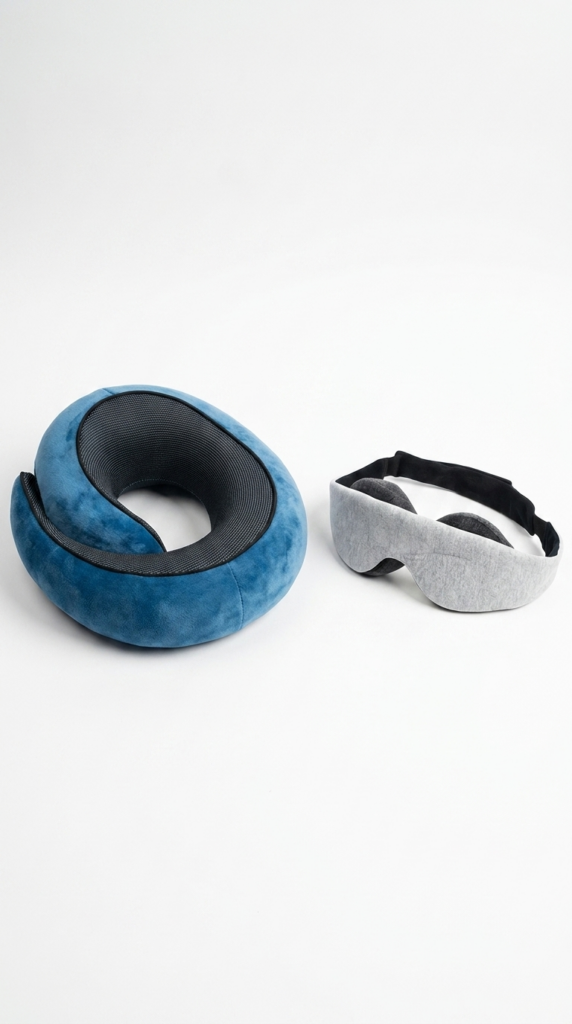
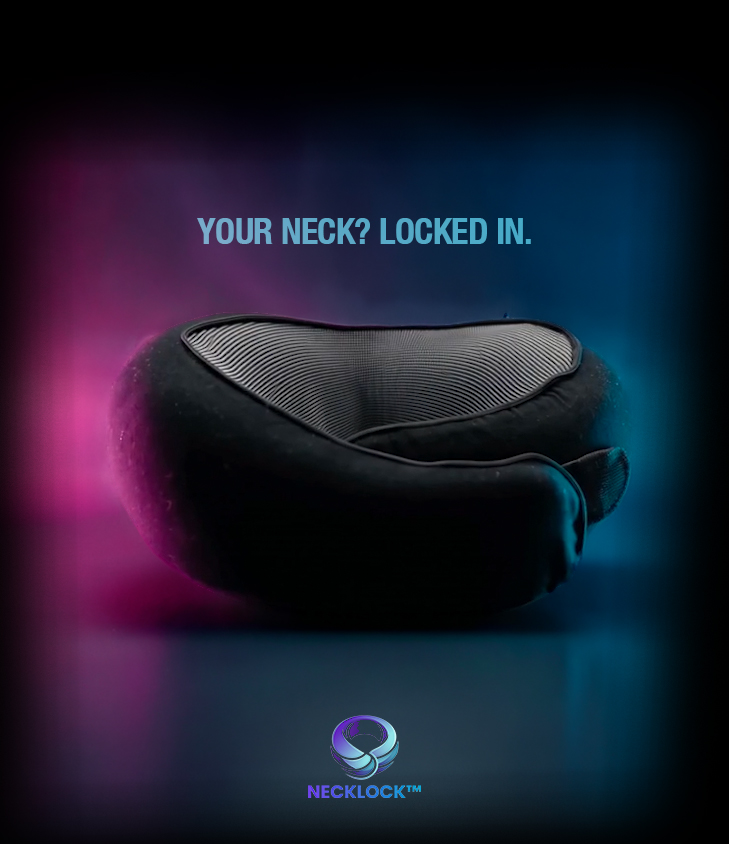
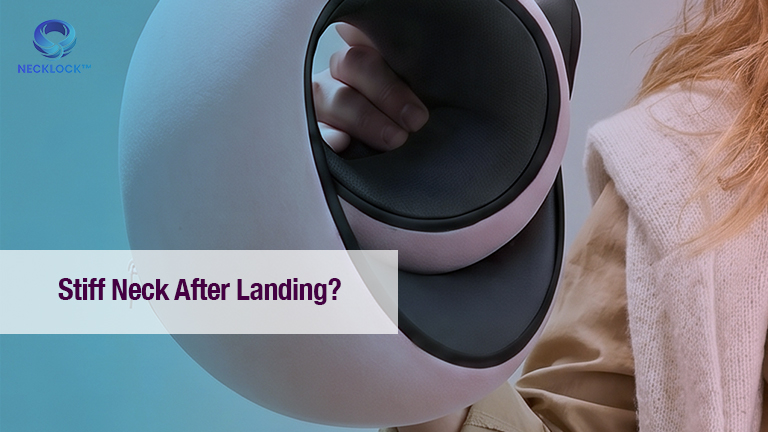
NECKLOCK COMFORT is a memory foam travel neck pillow designed around the wrap-lock principle — it wraps behind your neck, the two ends come forward and fasten together at the front, and it stays secured in position for the entire flight.
It was designed for long-haul travellers who have tried every other option and kept landing wrecked. It’s operated out of Adelaide, South Australia, ships free Australia-wide, and comes with a 90-day return policy.
If you’ve never made it through a 14-hour flight without neck pain, it’s worth trying once.
Frequently Asked Questions
Does a travel pillow actually make a difference on long flights? Yes — but only if it stays in position. A pillow that slips off while you sleep provides no benefit. The difference between a secured wrap-lock pillow and a standard U-shaped pillow is significant on flights over 8 hours.
What’s the best travel pillow for long-haul flights from Australia? Look for a wrap-around design with a locking mechanism, high-density memory foam, and a compact pack size. NECKLOCK COMFORT is designed specifically for this use case and ships free anywhere in Australia.
Why does my neck hurt after flying? Neck pain after flying is almost always caused by your head dropping forward or sideways while you sleep, placing sustained strain on your neck muscles and ligaments over several hours. A supportive, secured neck pillow prevents this from happening.
How do I stop neck pain on a plane? Keep your neck supported throughout the flight — especially during sleep. A wrap-lock travel pillow that stays secured around your neck is the most effective single change you can make.
Is memory foam better for travel pillows? High-density memory foam holds its shape better than hollow fibre or standard foam, meaning it continues to support your neck throughout a long flight rather than compressing flat within an hour or two.
NECKLOCK is operated from Adelaide, South Australia. Free shipping Australia-wide. 90-day return policy.